I have this feeling again, just like I did with the Pixel 6. I kept thinking Google might finally get it right, and now, I think they might have. Google’s phones have always been strong on software, but the hardware needed to catch up to make a truly competitive device. Well, today’s Pixel 9 event might just be the moment they’ve nailed it.
Besides the new phones, Google also introduced a new watch and updated Pixel Buds. But let’s dive into the new phones, which I’ve been eagerly waiting for.
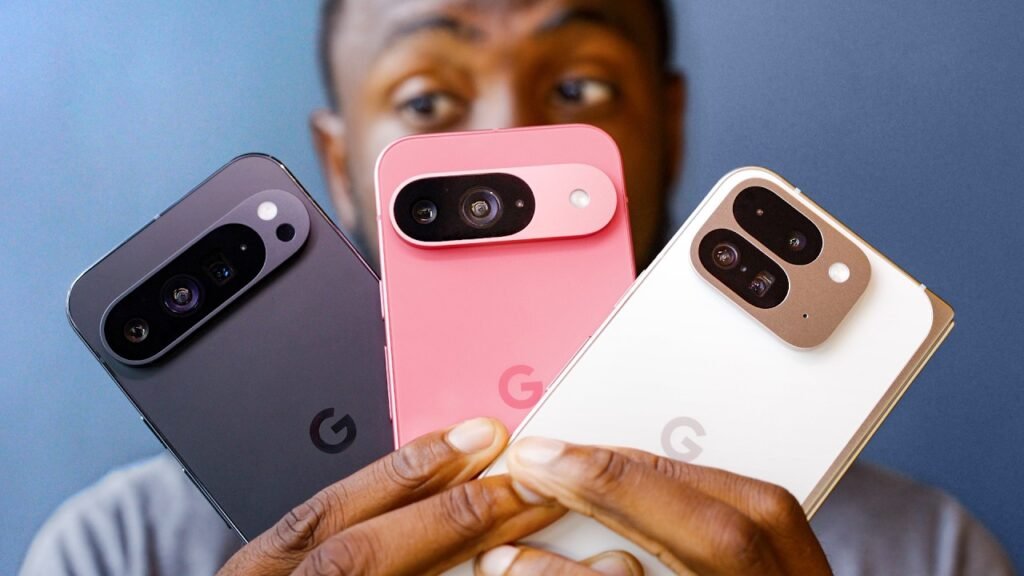
Here’s the lineup: Pixel 9, Pixel 9 Pro, Pixel 9 Pro XL, and Pixel 9 Pro Fold. Some people are saying the names are a bit confusing, but honestly, it’s not too bad—except maybe the Fold. The Pixel 9 starts at $799, and you get a 6.3-inch display with a fresh design featuring flat matte metal sides and a polished glass back. The color choices are Porcelain (white), Obsidian (black), Wintergreen, and Peony—giving off some serious Cosmo and Wanda vibes.
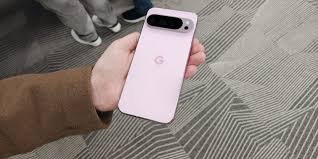
For the Pro models, there’s the Pixel 9 Pro and Pro XL. The 9 Pro is the same size as the Pixel 9, kind of like what Apple does with its iPhones. The Pro XL is just bigger, with a 6.8-inch screen and a larger battery. The Pro phones start at $999 and $1,099. They come with an extra telephoto camera, more RAM, and switch to glossy rails with a soft-touch glass back. You can get them in Obsidian, Porcelain, Hazel (which looks amazing), and Rose Quartz (a soft pink).
I spent about two hours handling these new phones, and from the get-go, I was impressed. Google has clearly put a lot of effort into making these feel like true flagship devices. It’s not just the flat sides trend—though I’m a fan of that—but the phones have a more solid, premium feel in your hand. The screens are much brighter too. For instance, the Pixel 9’s Actua display is 35% brighter than the Pixel 8’s, and the bezels are thinner all around. And yes, the fingerprint reader is now ultrasonic instead of optical, which is a big plus. The camera visor on the back might be a bit polarizing, but that big lens opening looks pretty promising to me.
Of course, I’ll need to dive into a full review to really test these features, but my first impression is that the photos will likely have that signature Pixel punch and contrast. With the larger sensors, we might see a shallower depth of field. I have to admit, while I miss the older camera designs, the new flat island design is still uniquely Pixel and not too shabby.
Here’s a quick rundown of the specs. All the new Pixels come with the same Tensor G4 chip, which is said to be more powerful and efficient with better AI capabilities. What’s interesting is that both the base and Pro models share the same primary and ultrawide cameras. This makes the base model look like a fantastic deal, especially considering there’s a $200 difference between it and the Pro. For that extra cost, the Pro offers a slightly better screen, a telephoto camera, more RAM, and a better selfie camera—that’s pretty much it.
I’m holding off on final judgments until I’ve run benchmarks and tested the long-term performance. But if Google’s claim that the Tensor chip is 20% faster for web browsing and 17% faster for app launches holds true, these phones are going to be very quick. I’m also thrilled that Google made a smaller phone with many of the Pro features. It’s perfect for those who want a high-end phone without going for a massive model. It’s great to see a Pro that isn’t just a Pro Max.
Of course, the Pixel 9s are packed with AI features—it’s kind of their thing. Here’s a look at some of the new stuff they’re bringing to the table: the updated Weather app, the new Screenshots app, and Pixel Studio.
First off, the Google Weather app has been completely revamped. It’s now got a modern, tile-based design, and at the top, you’ll find an AI-generated comment about the weather. Sometimes it might even suggest what you should wear. I have to admit, I don’t use stock weather apps much, but if you’re into that sort of thing, this is a pretty cool update.
Then there’s the Screenshots app. It’s designed to gather all your screenshots in one place and scan them for information. It’s meant to help you keep track of things and find what you need later. Not everyone might find this super useful, but if you’re someone who takes a lot of screenshots, it could be a handy tool.
And finally, Pixel Studio. This is the new app for creating AI-generated art right on your phone. It works with just a text prompt and generates images in about three seconds. It’s all done on-device, so it works even if your internet connection isn’t the best. Whether you’re making memes, visuals for social media, or just playing around, Pixel Studio adds a fun new creative option to your phone.
So, the Magic Editor in photos has this wild new feature called Reimagine. It’s pretty mind-blowing—you can now not only erase or reframe stuff in your pictures but also highlight a part of the photo and transform it into something completely different based on whatever you type. Basically, you can create new scenes and images that never actually happened, kind of like Samsung’s sketch-to-image. It’s a whole new take on what a photo even is!
But the real game-changer might be the Add Me feature in the camera. I had a chance to try it out, and it’s super cool. Here’s how it works: If you’re trying to take a group photo but don’t have anyone to snap the picture for you, Add Me steps in.
First, open the camera mode. It’ll ask you to wiggle the camera a bit to get a sense of the 3D space around you. Then, take a photo of the group, making sure to leave some space for yourself. After that, everyone else steps out, and someone else becomes the new photographer. They’ll help guide you into position while the camera overlays the previous group photo and a white box to keep everything framed correctly. Once you’re in place, the new photographer takes the shot, and Google merges the two images into one seamless group photo with everyone included. It’s like capturing a moment that never really happened. And don’t worry, it keeps the original photos too. Totally futuristic, right?
There are other cool features too, like Clear Calling, which makes calls clearer, Call Notes that summarize your conversations, and Gemini Live, which lets you chat with the Gemini assistant (though it’s still a bit confusing). But honestly, I was most excited about the hardware upgrades in these new phones.
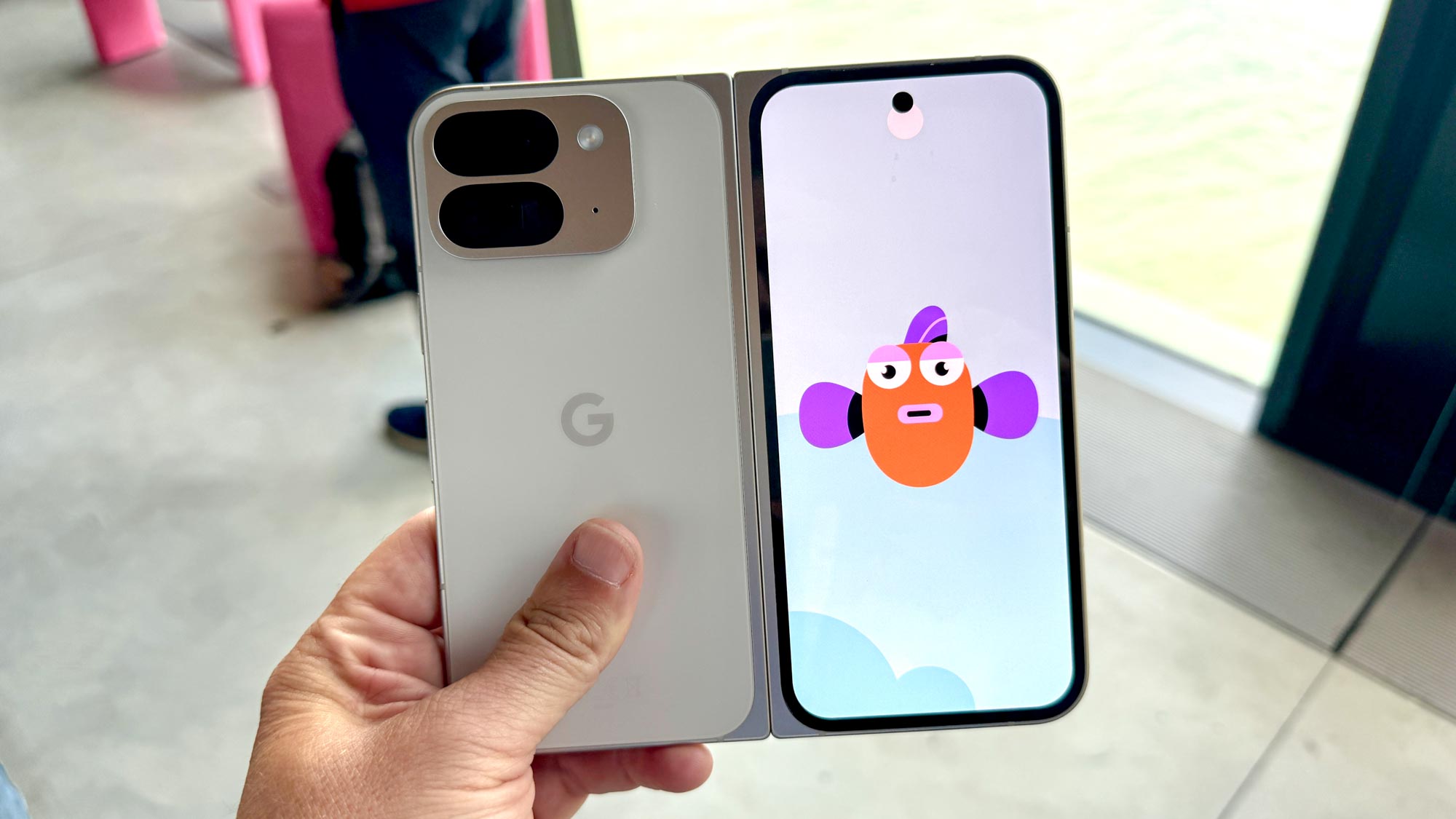
Now, let’s talk about the Pixel 9 Pro Fold. I’m not quite sure why they went with that name instead of Pixel Fold 2, but maybe Google wanted to keep the naming consistent with the Pixel 9 series. They’ve added “Pro” for some reason, but it’s basically the next iteration of the Pixel Fold. And it’s priced the same as before at $1,799.
Google really upped their game with this one. The last Fold was pretty good when it was closed (a backhanded compliment, but true), but this new version is a whole different ball game. The outer screen is now 6.3 inches, which is about the same size as the regular Pixel 9’s display. The bezels are super thin, and the whole phone feels sleek and lightweight. Plus, the display is 80% brighter than the previous model, so it’s really easy to see even in bright light.
When you unfold it, you get an eight-inch screen that matches the layout of the outer display. The phone feels premium with its metal rails and soft-touch matte glass. It’s incredibly thin—definitely one of the thinnest foldables out there, with edges that are barely thicker than a USB-C port.
The camera bump on the back is still there, and it’s a bit awkward, but honestly, it’s easy to overlook with how great the rest of the phone looks and feels. It’s fantastic to use whether it’s open or closed, and it’s shaping up to be a better version of the already impressive OnePlus Open.
We’ll need to see how the battery life and new camera system stack up against the Pixel 9’s, but my first impression is really positive. It comes with the Tensor G4 chip, 16 GB of RAM, and all the cool Pixel features like Pixel Studio, the Screenshot app, and the Weather app. It’s also IPX8 rated, so it can handle a splash or two. Google is working with developers to optimize games for the inner screen, which should be interesting to see. You can choose between Porcelain (white) and Obsidian
I’ve been off the foldable phone train for a while, sticking with regular slab phones. But the Pixel 9 Pro Fold might just make me reconsider. If the outer screen is as practical as any other phone, and with that massive eight-inch display for when I want it, this could be a real game-changer. It’s one of the biggest screens we’ve ever seen on a phone!
It feels like Google’s flagship phones are finally getting the update we’ve been waiting for. The only thing that’s a bit of a letdown is the lack of Qi2, which is a shame considering the specs. But it’s not just the phones; there are some cool gadgets on the way, too.
For instance, the new Pixel Watch 3 keeps the same look but now comes in two sizes. There’s a larger 45-millimeter version that gives you about 40% more screen space. The bezel is also slimmer, and the display is brighter at 2,000 nits. There’s a new body score feature that sums up all your metrics into one score, which seems to be a trend this year. The watch also includes new running features and a dual-chip setup for better battery life—up to 36 hours with Battery Saver. It’s not revolutionary, but it’s an improvement. Pricing stays the same: $349 for the smaller model and $399 for the larger one.
Let’s dive into the new Pixel Buds Pro 2. They’ve updated the design to be sleeker and more compact—no more stalks, just tiny buds with a little stabilizer fin to keep them in place. I’ll give them a go, but my ears can be finicky, so we’ll see how well they fit.
These buds feature a new custom-designed A1 chip based on Tensor, which should make a big difference in active noise cancellation and overall sound quality. Plus, they let you have a real-time chat with Gemini Live—basically, you can have an actual conversation with the assistant. I’m looking forward to trying these out and giving you a full review. Let me know what interests you the most—whether it’s the AI features, new camera tech, or the sleek new design. Drop your thoughts in the comments!
A while back, I ran a Twitter poll asking how many of you use a phone case, and about 75% of you said you do. With phone prices climbing, that makes total sense. If you’re thinking about getting a case, I recommend the Grip Case from our channel sponsor, dbrand. It’s got a matte black finish, great grip, clicky buttons, and strong magnets for extra protection.